Feedback, suggestions, correction requests, and questions should be sent to: Professor Mohammed Ataur Rahman, Director, IUBAT Institute of SDG Studies Office. marahman@iubat.edu / +88-02-01820425191
International University of Business Agriculture and Technology (IUBAT) has been operating sustainability activities under the CGEC-Centre for Global Environmental Culture since 2008. The sustainability program has been taken over by the IISS-IUBAT Institute of SDG Studies. IISS is especially focused on the education and research of SDGs. However, CGEC is the host of the Regional Centre of Expertise (RCE) Greater Dhaka which is a UN program of Education for Sustainable Development (ESD). It is envisioned that the RCE Greater Dhaka will serve as an example of good practice to other regions facing similar sustainability challenges and issues and contribute to the goals set by the UN Decade of Education for Sustainable Development (https://www.rcegreaterdhaka.org/objectives.php). With its global network and collaboration with RCE, IUBAT has taken many UNU University recognizable sustainability projects on: Traditional knowledge, Knowledge Based Area Development, Improvement of health of urban slums, Global action plan on ESD, Students’ sustainability engagement, Rural home-centered farming for food security, Ecosystem management and Global citizenship education [ See annexure-1]. The sustainability practices operated at IUBAT include energy saving, wastewater reuse, waste management, tree plantation, reduction of carbon footprint, greening the campus etc. There is a combined effort of the faculty members, students, administration and operations lying behind as a Whole Institution Approach. This university has a nationwide impact because of playing the role of a model educational institution for sustainable activities in Bangladesh and training up resource persons for sustainability leading in Bangladesh’s future.
SDG 1 – No Poverty
RESEARCH&INNOVATION:IUBAT is to eradicate poverty in the country through developing skilled human resources from every corner of the society. The university is working on taking rural background students and grooming them through effective courses. The education loan of the university has proven successful in completing the education of the students. Tertiary education in private universities is expensive and there is limited seat capacity in public universities. As a pioneer non-government university IUBAT has opened the door of higher education to a vast number of students. The institution is also working on skilled human resource development and education access to meritorious but needy students.
TEACHING:
- There are 12 degree programs at the university to train students for employment. These programs are in agriculture, engineering, business, economics, tourism & Hospitality, arts and health science and fulfill the needs of the socio-economic demands of the country.
- There are 25 faculty members at the IUBAT whose work is closely related to SDG1
- There are 12 undergraduate courses at the IUBAT related toSDG1
- Browse the course inventory at: /
OPERATIONS:
- IUBAT policy on Student Financial Support states “Higher Education for Every Qualified Person with Finance for Meritorious but Needy.” See the policy in full at: https://www.iubat.net/kbad/
- IUBAT offers various forms of financial support to help supplement a student’s family resources. These include scholarships, grants, fee waivers, deferred payment options, on-campus employment, and educational financing. The university is committed to ensuring that all qualified students—regardless of their family’s income level—have access to higher professional education through suitable financial assistance arrangements. See the list of scholarships at: /admission/scholarships/
- The university provided jobs for 600+ academic and non-academic staff. Many of the staff are living on the poverty lines earning less than US$1.5 a day.
OUTREACH:
Since 2006, IUBAT has been committed to promoting inclusive and accessible higher education through the KBAD Merit Scholarship and Fee Waiver Program. The program provides tuition fee waivers and financial support to deserving students from a wide range of academic backgrounds, including HSC, Alim, Vocational, Diploma, GCE, and undergraduate and graduate programs. Through this initiative, IUBAT recognizes academic excellence and supports talented students who may face financial constraints. The following table presents the percentage of students who received a 100% tuition fee waiver scholarship under KBAD across different semesters, highlighting the university’s continued dedication to educational equity and student success.
| Semester | % of students | Semester | %of students |
| Fall 2025 | 38.00 | Summer 2022 | 33.00 |
| Summer 2025 | 35.00 | Spring 2022 | 38.00 |
| Spring 2025 | 29.00 | Fall 2021 | 24.00 |
| Fall 2024 | 27.00 | Summer 2021 | 26.00 |
| Spring 2024 | 20.00 | Spring 2021 | 12.00 |
| Fall 2023 | 38.00 | Fall 2020 | 15.00 |
| Summer 2023 | 25.00 | Summer 2020 | 9.00 |
| Spring 2023 | 40.00 | Spring 2020 | 10.00 |
| Fall 2022 | 34.00 |
Source: https://iubat.net/kbad/coverage.php
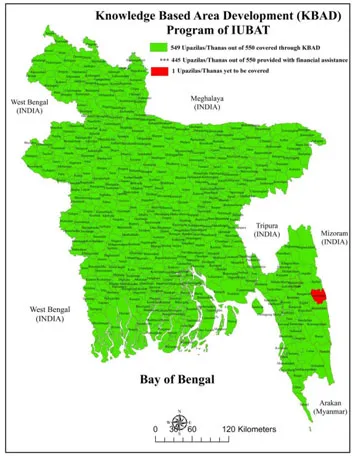
Figure: Knowledge Based Area Development (KBAD) program of IUBAT that supports many students to complete their study with dignity by providing financial aid Each year, the IUBAT Rotaract Club over 60 student volunteers work in collaboration with local people to deliver food and cloth to the most vulnerable communities.
IUBAT donated food in orphanage in several national days of the country to feed poor students.
More Info: https://www.rcenetwork.org/portal/rce-greater-dhaka
SDG 2 – Zero Hunger
RESEARCH&INNOVATION:- IUBAT was the first private institution of Bangladesh to offer an agriculture degree that is crucial for the agriculture-based country. These skilled graduates in agriculture and technology have been working on nutrition and food security of the country.
- The university has so far 37 publications in the field of SDG 2 in 2025.
- Extensive research activities perform by the both students and faculty members in the wide range of agriculture system. Outstanding research outcomes try to solve the problem of hunger in regards of mitigate the problem of food, agriculture, natural resources and environment under the vision of SDG 2: Zero hunger. More research information at: https://cas.iubat.edu/research/
- Perennial rice research at IUBAT represents a pioneering effort toward sustainable agriculture in Bangladesh. Since 2019, researchers at the College of Agricultural Sciences have been evaluating perennial rice varieties that can produce multiple harvests from a single planting through rationing. This innovative cropping system reduces the need for repeated land preparation and replanting, thereby lowering production costs, conserving soil resources, and minimizing environmental impacts. The successful harvesting of multiple consecutive seasons from the same rice plants demonstrates the potential of perennial rice to enhance food security, climate resilience, and sustainable agricultural development in Bangladesh.
- A seminar entitled “BARI developed Farm Machinery Fair and Talent Hunt on Poster Presentation” was jointly organized by Bangladesh Agricultural Research Institute (BARI) and the College of Agricultural Sciences, IUBAT on 24 June 2025. The program aimed to acquaint the students about the latest developments on farm machineries and dissemination of those technologies for enhancing agricultural productivity in Bangladesh.
OPERATIONS:
- Thereare20facultyatIUBATwhosework iscloselyrelatedtoSDG2.
- The university is maintaining a high standard by employing faculty members who are all doctoral degree holders in agriculture or natural sciences.
- The university acquired 12 hectares land for agricultural research in Rajendrapur, Gazipur.
OUTREACH:
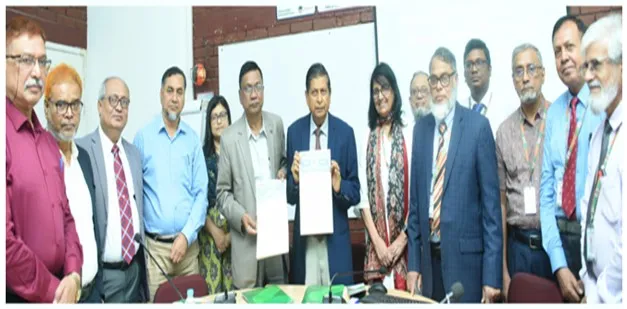
On 8 July 2025, IUBAT signed a Memorandum of Understanding with the Krishi Gobeshona Foundation (KIB) to strengthen agricultural research, academic exchange, technology dissemination, and capacity building. The agreement opened opportunities for IUBAT faculty and students to participate in collaborative agricultural research and research grant programs.
SDG 3 – Good Health and Well Being
RESEARCH&INNOVATION:- The university has 168 scholarly publications related to SDG 3 by the year 2025.
- The College of Nursing of the university offers nursing degrees and doing research related to SDG3. In bringing up the health service of the country higher degree in nursing is crucial for Bangladesh. The program seeks to prepare students for a career in international standard professional nursing with the goal of improving health care and overall quality of life in any country. The university opened a Master in Public Health (MPH) degree program in July 2023. The nursing college had done leading research on COVID-19 that was published in indexed journals. Extensive research was conducted on various health and medical issues and about 78 research articles published in 2025 at indexed journals related to SDG 3.
OPERATIONS:
- There are 15 faculty at IUBAT whose work is closely related to SDG 3
- The college has collaboration with many hospitals in Dhaka city.
- The institution has a regular health assessment program in the community level across the country. In the urban area, the program is named Street Nursing.
IUBAT NEWSRELATEDTOSDG3:
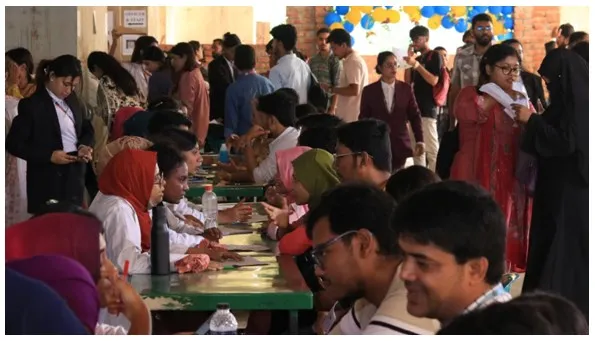
- The College of Nursing, in collaboration with the Bangladesh Thalassemia Samity and Hospital, organized a health checkup and voluntary blood donation campaign on the IUBAT campus in the month of July, 2025. The event aimed to promote public health awareness, social responsibility, and support for patients requiring blood transfusions.
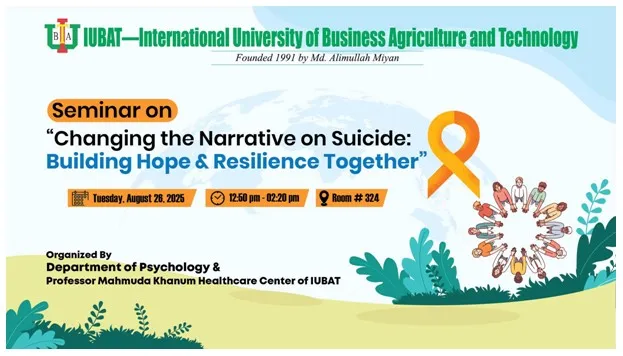
- The Department of Psychology at IUBAT, in collaboration with the Professor Mahmuda Khanum Healthcare Center, organized a seminar titled “Changing the Narrative on Suicide: Building Hope & Resilience Together.” The program focused on raising awareness about suicide prevention, reducing stigma surrounding mental health issues, and promoting resilience-building strategies among students and participants. Experts and speakers highlighted the importance of early identification of psychological distress, timely intervention, and the creation of a supportive academic environment to safeguard mental well-being. The seminar reflected the institution’s continued commitment to mental health awareness and community well-being.
SDG 4 – Quality Education
RESEARCH&INNOVATION:- The university has 46 scholarly publications related to SDG 4 by the year 2025.
International University of Business Agriculture and Technology (IUBAT) are ranked in several international ranking systems. The latest publicly reported positions include:
- QS World University Rankings 2025:#1401+ globally. IUBAT was reported as 5th among private universities in Bangladesh and 13th among the Bangladeshi universities included in the QS ranking.
- QS Asia Rankings 2025:#621–640 in Asia and #186 in Southern Asia.
- Times Higher Education (THE) Impact Rankings 2025:#801–1000 globally overall. In specific SDGs, IUBAT performed particularly well in SDG 1 (No Poverty), ranking 201–300 globally.
- World University Rankings for Innovation (WURI) 2024:109th globally among innovative universities.
- UI GreenMetric World University Rankings 2024:275th globally for sustainability and environmental performance.
- IUBAT secured 4th positionamong enlisted twelve Bangladeshi Public and Private Universities.
- IUBAT obtained 1st position among Bangladeshi Universities in SDG 17(Partnerships for goals).
- IUBAT is the host of the Regional Centre of Expertise (RCE) Greater Dhaka of the UN Flagship project on Education for Sustainable Development (ESD).
Link: https://www.rcenetwork.org/portal/rce-profile-detail/935
TEACHING:
- IUBAT has a mandatory ESD course for all undergraduate students since 2013. This course builds up a positive attitude of the students toward environment and sustainability.
- All the 12-degree offering programs of the university offer OBE-Outcome Based Education.
Browse the course inventory at: https://iiss.iubat.edu/
OPERATIONS:
- The faculty members and program administrators ensure educational quality. IQAC- Institutional Quality Assurance Cell monitors and assesses quality of education.
- There are 20 faculties at the IUBAT whose work is closely related to SDG 4.
- The Environment Science Department offers the mandatory ESD course in 10 undergraduate programs.
OUTREACH&PARTNERSHIP:
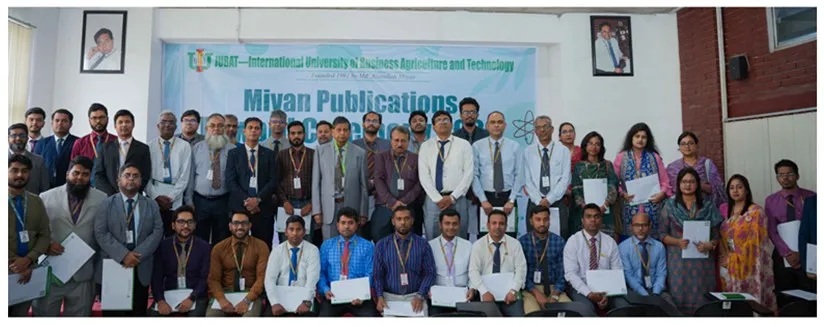 IUBAT hosted the ‘Miyan Publication Reward 2026’ to recognize academic and research excellence.
SDG 5 – Gender Equality
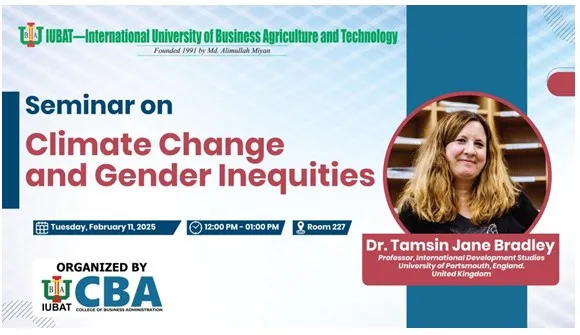
RESEARCH&INNOVATION:- IUBAT Institute of SDG Studies (IISS) is especially concerned on research related to Gender related issues.
- The university has 05 scholarly publications related to SDG 5 on 2025.
TEACHING:
- There are 15 undergraduate courses at the University related to SDG 5.
Browse the course inventory at: https://iiss.iubat.edu/
OPERATIONS:
- There are 15 faculty at the IUBAT whose work is closely related to SDG 5.
- The University 15% more scholarship is available for female
- Male/Female job ratio is in good
- The University submitted its Final Report on Prevention and Response to Sexual Violence and subsequent.
OUTREACH&PARTNERSHIP:
- The University has an ongoing study on the female participation in study and employment annually to ensure equal opportunity in gender.
SDG 6 – Clean Water and Sanitation
RESEARCH- The university has 18 scholarly publications related to SDG 6 on 2025.
- The faculty members of the university are doing research on water quality index analysis of Turag River. It is to be mentioned that Turag is a much-polluted river due to textile industrial pollution with oxygen content near zero in dry season needs annual monitoring and assessment of water quality.
- For the biodiversity conservation effort of Turag River IUBAT is aiming to release fish spawn and beneficial frog species in the river.
TEACHING:
- There are 6 undergraduate courses at the University related to SDG 6.
- Browse the course inventory at: https://iiss.iubat.edu/
OPERATIONS:
There are 5 faculty at IUBAT whose work is closely related toSDG6.
OUTREACH&PARTNERSHIP:
The university has pioneer research and industrial projects on ETP-Effluent Treatment Plant
The university has basic ongoing research on the water quality monitoring of the major rivers in Dhaka.
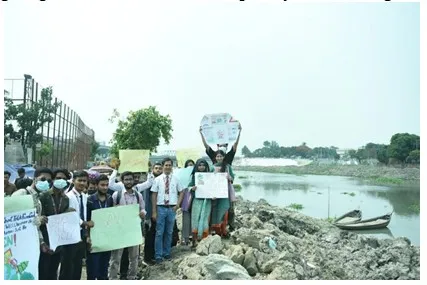
Protecting Turag River campaign with students April 2025
SDG 7 – Affordable and Clean Energy
RESEARCH&INNOVATION:- The University has scholarly 81 publications related to SDG 7 by the year 2025.
TEACHING:
- There are 10 undergraduate courses at the University related to Department of Electrical Engineering is leading the renewable energy research.
- Browse the course inventory at: https://iiss.iubat.edu/
OPERATIONS:
- There are 8 faculty at the University whose work is closely related to SDG 7.
- The university building is designed to use natural air and light with no air conditioning in the classrooms, faculty rooms and offices.
- A 234 KW solar panel installed at the rooftop of the campus building is one of the largest solar panels in education institute.
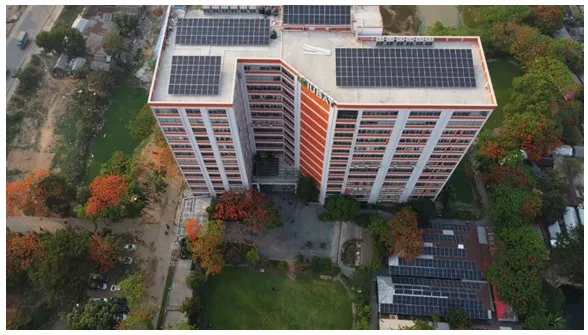
A 234 KW solar panel installed on the rooftop of the campus building
SDG 8 – Decent Work and Economic Growth
RESEARCH&INNOVATION:- The University has 60 scholarly publications related to SDG 8 in 2025.
- The university has pioneer research on Green HRM (Human Resource Management), Sustainable Leadership and Sustainable Organization.
- The IIEC-IUBAT Innovation and Entrepreneurship Center organized a highly awaited and transformative competition that will bring together aspiring entrepreneurs from diverse regions throughout the nation of Bangladesh
TEACHING:
- There are 60 undergraduate courses at the University related to SDG 8.
Browse the course inventory at: https://iiss.iubat.edu/
OPERATIONS:
- There are 50 faculty at the University whose work is closely related to SDG 8.
- The University has an alumni and placement office for the graduates.
- The University is a provider of jobs for the alumni and has many options where the undergraduates can earn and study.
NEWSRELATEDTOSDG8:
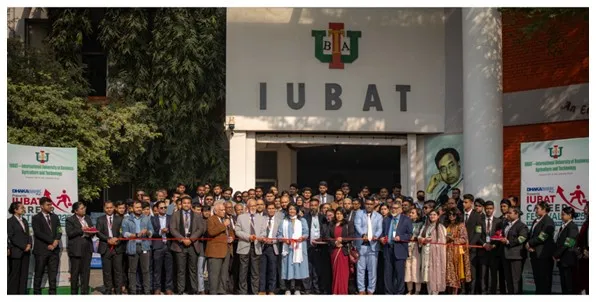
To bring young graduates closer to their career aspirations, the International University of Business Agriculture and Technology (IUBAT) organized one of the country’s largest employment-focused events, ‘Dhaka Bank Presents IUBAT Career Festival 2025.
SDG 9 – Industry, Innovation and Infrastructure
RESEARCH&INNOVATION:- The University has 200 scholarly publications related to SDG 9 in 2025.
TEACHING:
- There are 150 undergraduate courses at the University related to SDG 9.
- Browse the course inventory at: https://iiss.iubat.edu/
OPERATIONS:
- There are 55 faculty at the University whose work is closely related toSDG 9.
- Department of Civil Engineering is a leader in education and research for developing sustainable solutions for the global community. The department conducts research across a wide range of relevant fields and the department teaches a variety of undergraduate courses training future leaders in the development of infrastructure aroundtheglobe.
OUTREACH&PARTNERSHIP:
IUBAT Innovation Hub, A collaborative ideation, learning and maker space will enable students and educators, joining with entrepreneurs, business leaders, local government officials, alumni, and educational partners, to co-create and realize the power of human innovation through cross-pollination of education, business and community talent immersed in the best of startup culture.
NEWSRELATEDTOSDG9:
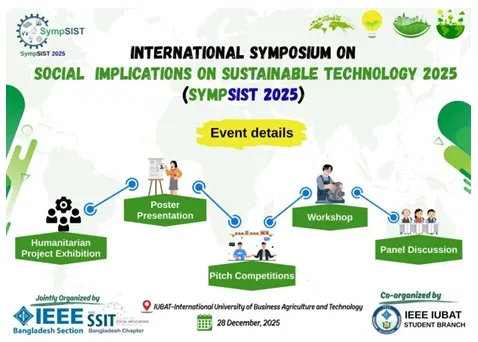
Dive into the future of innovation with a powerful session on “AI-Driven Next-Generation Technologies: Societal Implications and Implementation Challenges”.Jointly Organized by IEEE Bangladesh Section & IEEE SSIT Bangladesh Chapter (Website: https://sympsist-2025-iubat-ewrmo5o.gamma.site/)
SDG 10 – Reduced Inequalities
RESEARCH&INNOVATION:- The University has 10 scholarly publications related toSDG 10 between2025.
- Under KBAD program stated below merit Scholarship has been given approximately BDT 164.9 million; Interest free loan approximately BDT 20 million; Special Scholarship BDT 0.66 million with a total sum 185.56 million BDT or 2.2 m USD. This unique program complies with SDG goals 4.3, 4.4 and 4.7. These goals ensure equal access of affordable, technical, tertiary and sustainable education to all leaving no one behind. KBAD is a model to eradicate educational discriminant in a nation by removing financial barriers in tertiary education.
TEACHING:
- There are 6 undergraduate courses at the University related toSDG10.
- Browse the course inventory at:https://iiss.iubat.edu/
OPERATIONS:
- There are 20 faculty at the University whose work is closely related to SDG 10.
- The University on accessible higher education to all, regardless of their economic circumstances. See the https://iubat.net/kbad/
- IUBAT policy on Student Financial Support states “Higher Education for Every Qualified Person with Finance for Meritorious but Needy.”
OUTREACH&PARTNERSHIP:
The KBAD Project at the University is “IUBAT has set out the long-term vision of producing at least one professional graduate from each village/ward under the KBAD concept as a step towards community self-reliance. To materialize this vision and to translate the concept into reality, IUBAT has special provisions for supplementing the family resources of a student through scholarship, grant, fee waiver, deferred payment, campus job, educational financing and the like. It is IUBAT policy to cater to the needs of all qualified students who aspire to higher professional education-regardless of the income level of his/her family through appropriate educational financing arrangements.”
On the face of large scale so called educated unemployment in the country, a question may arise as to the outcome of study by the students who have received financial assistance, since many of them come from a socially disadvantaged strata of the society. Nearly 40% of the financial assistance recipients have completed their studies, while 35% are continuing their studies at IUBAT. Nearly 25% discontinued study at IUBAT, some of whom continued study in other institutions. An informal survey indicated the following status of all those who completed the program. For more information browse at https://iubat.net/kbad/success-story/
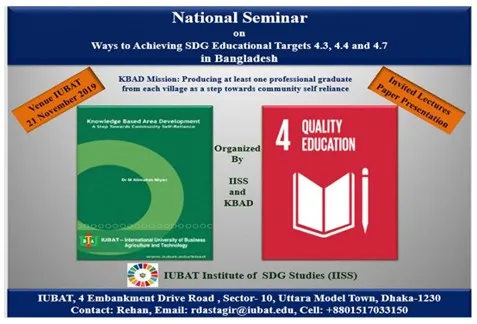
SDG 11 – Sustainable Cities and Communities
RESEARCH&INNOVATION:- The University has 45 scholarly publications related to SDG 11 in 2025.
TEACHING:
- There are 6 undergraduate courses atthe University related toSDG11.
- Browsethecourseinventoryat:https://iiss.iubat.edu/
OPERATIONS:
- Thereare10
- IUBAT is ranked as UI GreenMetrics University of the world.
- The building material of the university is plaster free hollow brick.
- The classroom of the university using natural air and light, electric fan having no air conditioner.
OUTREACH and EVENTS
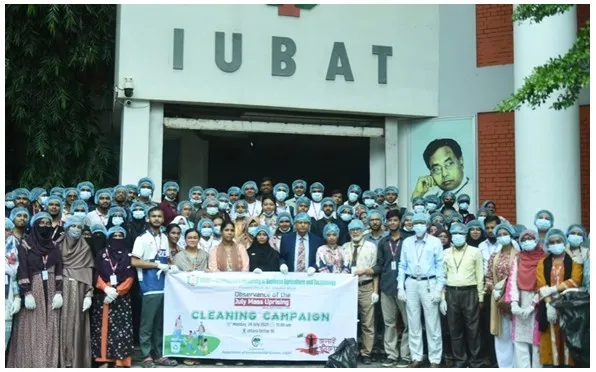
The Department of Environmental Science at IUBAT successfully organized a Cleaning Campaign on Monday, 28 July 2025. The campaign took place at the IUBAT Front side Arena and Uttara Sector 10, promoting cleaning and recycling awareness among the IUBAT community and local residents.
SDG 12 – Responsible Consumption and Production
RESEARCH&INNOVATION:- The University has 39 scholarly publications related to SDG 12 by the year 2025.
TEACHING:
- There are 10 undergraduate courses at the University related to SDG12.
- Browse the course inventory at:https://iiss.iubat.edu/
OPERATIONS:
- There are 1
- Recycling and waste reduction are high priorities at the University. One metric ton plastic recycled at IUBAT each year equivalent to 6 ton CO2 emission cut each year.
- Providing bus service to carry students from all around Dhaka city.
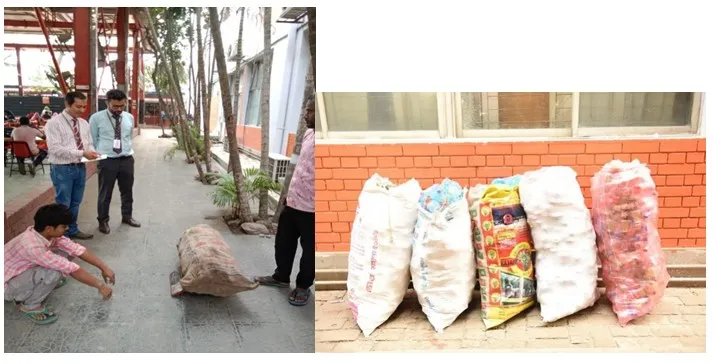 Plastic waste recycling at IUBAT
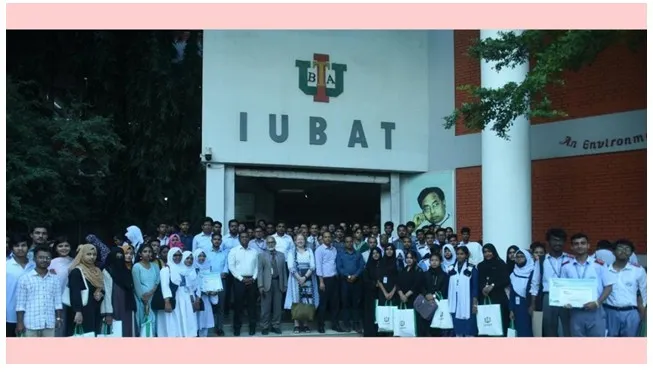
IUBAT successfully organized the 2nd Sustainability Olympiad 2025 to foster environmental awareness and promote sustainable development among young learners. Jointly hosted by the Department of Environmental Science, the Institute of Sustainable Sciences (IISS), RCE Greater Dhaka, and the KBAD program, the event brought together approximately 240 students from 25 colleges across the country. Through competitions, interactive sessions, and discussions, participants explored innovative solutions to contemporary environmental challenges. The Olympiad reflected IUBAT’s strong commitment to sustainability education, climate action, and the development of future leaders capable of contributing to a more sustainable society.
SDG 13 – Climate Action
RESEARCH&INNOVATION:- The University has 24 scholarly publications related to SDG 13 by the year 2025.
- The university has leading research on climate change and disaster management.
TEACHING:
- There are 20 undergraduate courses at the University related toSDG13.
- Browse the course inventory at:https://iiss.iubat.edu/
OPERATIONS:
- There are 10 faculty at the University whose work is closely related to SDG13
PROJECTS AND OUTREACH
- Rural Home-Centered Aggregating Farming (RHCAF) for Biodiversity Conservation, Ecosystem-based Adaptation and Climate Action
- Training of school teachers on climate action in association of Government and UNESCO
- Food Security and Soil Fertility of Hilly Areas of Bangladesh
- Wetland preservation around Dhaka City Area
- Food plant solution: Local Fruit trees Role on Nutrition on Climate Change
- Sustainable Landscape Management for ecosystem restoration, disaster risk reduction and climate action in Bangladesh
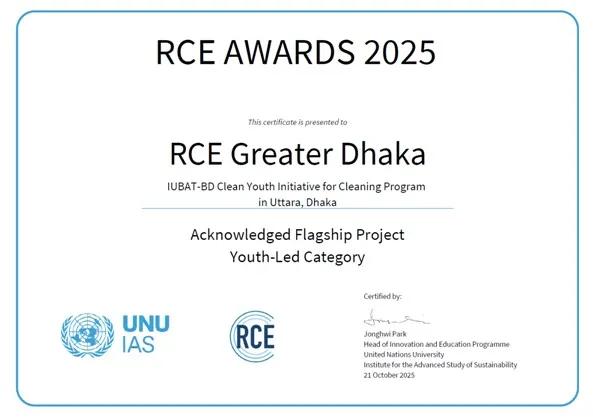
This award showcase the dedication of IUBAT to advancing ESD and contributions to the Global RCE Network.
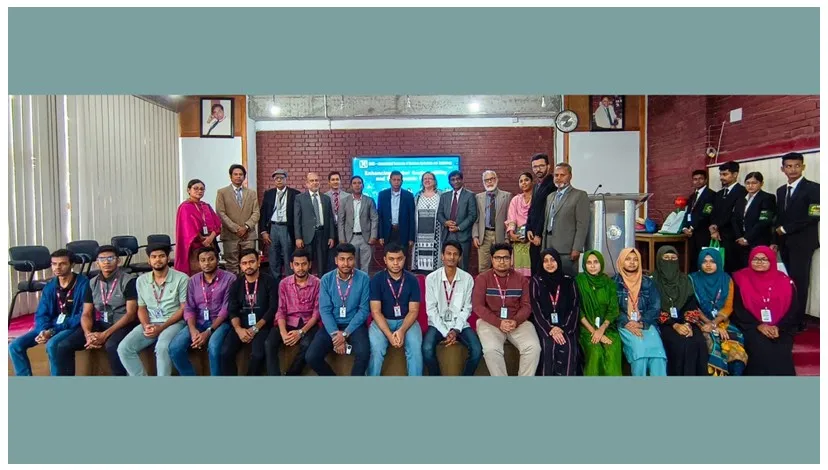 The Department of Environmental Science at the International University of Business Agriculture and Technology organized a national seminar on global sustainability on December 10, 2025.
SDG 14 – Life Below Water
RESEARCH&INNOVATION:- The University has 5 scholarly publications related to SDG 14 between 2025.
TEACHING:
- There are 2 undergraduate courses at the University related to SDG 14.
- Browse the course inventory at:https://iiss.iubat.edu/
OPERATIONS:
- There are 4 faculty at the University whose work is closely related to SDG14.
- Department of Environmental Science at the University has ongoing research on coastal ecosystem and delta management.
SDG 15 – Life on Land
RESEARCH&INNOVATION:- The University has 07 scholarly publications related to SDG 15 in 2025.
- The university conducted research on plastic pollution by the tourism industry and proposed sustainable solutions for biodiversity conservation and resource-efficient service industry.
- The university has leading research on industrial solid waste management.
TEACHING:
- There are 12 undergraduate courses at the University related to SDG15.
- Browse the course inventory at:https://iiss.iubat.edu/
OPERATIONS:
- There are 8 faculty at the University whose work is closely related to SDG15.
- Department of Environmental Science at the University has ongoing research on Life on Land.
- College of Tourism and Hospitality Management is very much concerned with Eco-Tourism and care for local environment. Every year the department organizes cleaning program in the natural tourist spot of the country.
OUT REACH&PARTNERSHIP
Department of Environmental Science is to train and develop, well equipped man power to tackle the growing environmental and developmental problems and changes arising from the transition to a sustainable society. In the 21st century caring for natural resource and facing the threats of climate change there is special needs of scientific knowledge and skills that are fulfilled by the program.
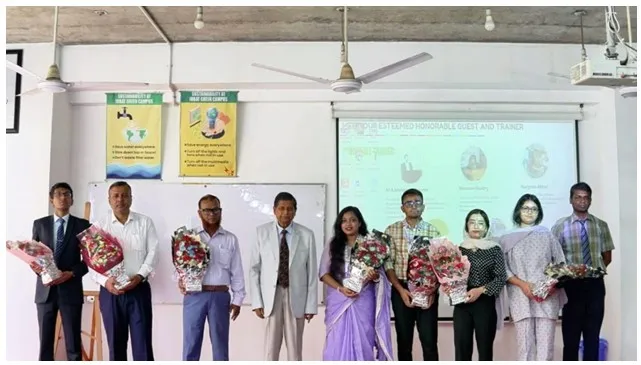
The International University of Business Agriculture and Technology (IUBAT) recently organized a day-long international workshop titled “Global Environmental Policy, Green Education, Leadership and Communication 2025” at its campus in Dhaka, Bangladesh.
SDG 16 – Peace, Justice and Strong Institutions
RESEARCH&INNOVATION:- The University has 32 scholarly publications related to SDG 16 between 2025.
TEACHING:
- There are 3 undergraduate courses at the University related to SDG 16.
- Browse the course inventory at:https://iiss.iubat.edu/
OPERATIONS:
- There are 5 faculty members at the University whose work is closely related to SDG16.
- Department of English at the university has ongoing research on Peace and Justice and they publish on national dailies on various affairs showing below:
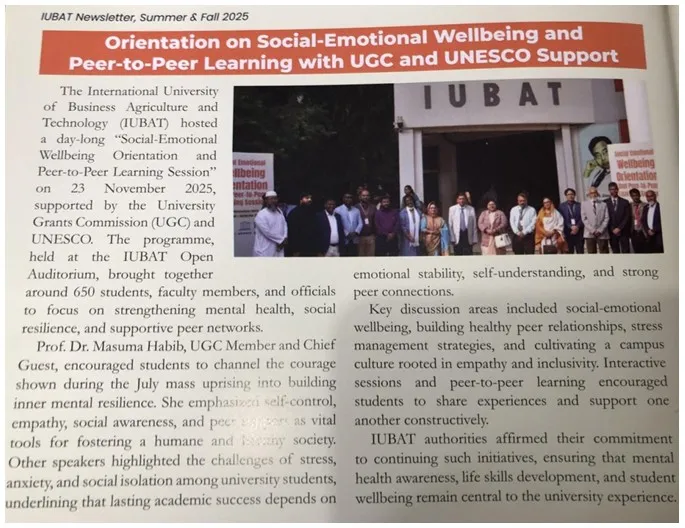
IUBAT arranged a day-long orientation on Social-Emotional Wellbeing and Peer-to-Peer Learning with UGC and UNESCO
SDG 17 – Partnerships for the Goals
RESEARCH, INNOVATION- The University has 05 scholarly publications related to SDG 17 between 2025.
- IUBAT obtained 1st position among Bangladeshi Universities in SDG 17(Partnerships for goals) in the global Times Higher Education ranking.
TEACHING:
- There are 5 undergraduate courses at the University related to SDG 17.
- Browse the course inventory at:https://iiss.iubat.edu/
OPERATIONS:
- Thereare5facultyattheUniversitywhoseworkiscloselyrelatedtoSDG 17.
- IUBAT Institute of SDG Studies is working on Global Citizenship Education of UNESCO. The purpose of the project is to provide a pedagogical guidance to teachers of the country.
OUTREACH AND COLLABORATION
- WWOOF-World Wide Opportunities of Organic Farming Bangladesh
- Global Soil Laboratory Network( GLOSOLAN)
- Regional Centre of Expertise, RCE Greater Dhaka, a UNU Program
- Alliance of Bioversity International and CIAT
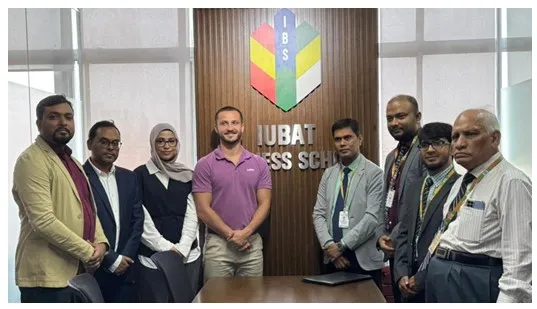
The International University of Business Agriculture and Technology (IUBAT) has signed a Memorandum of Understanding with Odoo, a global leader in open-source ERP software, to introduce a specialized ERP education programme at its Uttara campus. Metamorphosis Ltd, an official Odoo Silver Partner, joined the initiative.
Upcoming Sustainability Initiative at IUBAT
- Install Wastewater Treatment Process for recycling
- Install Automated sensor water taps in less used areas to save water
- Install Automated sensor for lights, fans, A.Cs ++
- Organize Training on waste reduction and sustainability issues for teachers and staff, security guards, cleaners
- Use Plastic free bottles in the café
- Use of 250 ml small mineral water bottles in the café, restaurant, seminar, and meetings events.
- Users taking water from water filters must use their own bottles.
- Install a water filter outside of the campus for community service
- Ban plastic bags inside the campus. Promote the use of jute bags, paper bags
- Appoint a faculty for sustainability inspection on the campus
- Procure and release captivated wild birds on the campus in association with the Wild Life Crime Control Unit of the Bangladesh Government for Biodiversity Conservation
- Target paper-free office. Reduce printing by all teachers, staff, and students using email and electronic media. Print both sides of a paper sheet. Reuse on-sided printed pages for draft writing/printing.
- Recycle old exam scripts by sending them directly to a paper factory that uses such papers for paper production.
- Prepare, preserve and upload on the website policies and reports on sustainability programs and activities.
Annex
Annex-1Education for Sustainable Development (ESD) in IUBAT
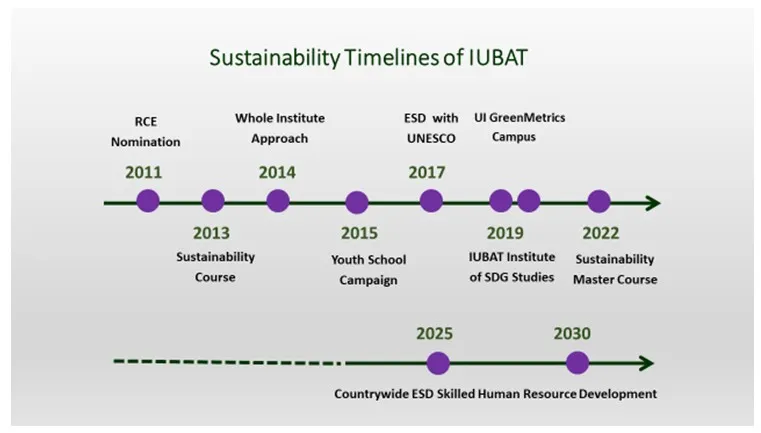
Founded in 1991 by Prof. Dr. M Alimullah Miyan, IUBAT—International University of Business Agriculture and Technology is the first nongovernment university in Bangladesh. IUBAT has set out the long-term vision of producing one professional graduate from each village of Bangladesh to contribute towards the creation of a knowledge-based society. Its mission is human resource development through appropriate teaching, training and guidance as well as creation of knowledge conducive to socio-economic development of developing societies in general and that of Bangladesh in particular. The university in pursuance of its mission of socio-economic development has established a Centre for Global Environment and Culture (CGEC) in 1999 which became the host of Regional Centre of Expertise (RCE) Greater Dhaka in 2011 and earned UN Flagship and Good Practice awards for spreading environmental education in 10 consecutive years (2012-2021). In 2008, IUBAT introduced a Program on Sustainability under CGEC. It has made a three-credit course on Environment and Sustainability mandatory for all undergraduate students of IUBAT. To meet its commitment to contribute to the achievement of SDGs, it has established the IUBAT Institute of SDG Studies (IISS) in 2019.
IISS is an education and research focused institute on sustainable development goals. It offers Certificate and Diploma courses and a Master in Sustainability Studies. The Institute illustrates implementation and demonstration of the SDGs by way of setting several practical models of projects at the field level. It also offers consultancy services for capacity building of the institutions engaged in SDG achievement. The resource persons are taken from internal and external sources. The milestone achievement of IUBAT is given below:
- Establishment of Centre for Global Environmental Culture (CGEC) in 1999
- Started Program on Sustainability in 2003 under CGEC
- Education for Sustainability program under CGEC
- Declaration of IUBAT Green Campus on 12 Aug 2008
- Hosted of Regional Centre of Expertise (RCE) Greater Dhaka in 2011 under CGEC
- Started ESD undergrad course in 2012 mandatory for all
- Development of ESD Curriculum for Undergrads
- Participation in the IPCC: Managing the Risks of Extreme Events and Disasters to Advance Climate Change Adaptation: Special Report of the Intergovernmental Panel on Climate Change (IPCC) – 2012: Lead and Contributing Authors IPCC Working Group II. Cambridge University Press: ISBN 978-1-107-025006-6, www.cambridge.org/978117607804
- IGBP and APN on the project: Global Environmental Change and Sustainable Development-Needs for the LDCs from 2011-2014
- Published 10 High Impact Articles on Sustainable Development, Disaster Risk Reduction, Weather and Climate Extremes
- IUBAT and RCE Greater Dhaka Awarded 2nd Prize from the Ministry of Environment and Forest in Word Environment Day 2014 for its outstanding achievement on the Theme Science behind Tradition for Raise Your Voice No More Sea Level Rise
- RCE Greater Dhaka Received UN Flagship Project Award in 2013, in Nairobi for expanding ESD through Knowledge Based Area Development in Bangladesh
- IUBAT Translated and adapted UNESCO “Global Citizenship Education” Document in 2018
- IUBAT Translated UNESCO Document “Getting Climate Ready-Guide for School” in 2021.
- Over twelve thousands undergrads were trained since 2012 through ESD course.
- RCE Greater Dhaka received UNU Awards in 2012, 2013, 2014, 2016, 2017 & 2018,2019,2020 and 2021 for sustainable activities
- UNU Flagship project in 2021: Human Resource Development and the need for Financial Assistance to poor & meritorious students under the project Knowledge Based Area Development (KBAD) in COVID-19.
- Hosted 13th International Knowledge Globalization Conference 2018 on SDGs
- National Seminar on Ways to Achieving SDG Educational Targets 4.3, 4.4 and 4.7 in Bangladesh 21 November 2019
- IISS launched at 23 April 2019 focused on research and training on SDGs
- UI GreenMetrics ranked Green Campus university in 2019, 2020 and 2021
- Annually over hundred schools campaigning were done till COVID-19.
Special Achievement on ESD Activities
- RCE Greater Dhaka received 2016 RCE Award for Innovative Project in Education for Sustainable Development (ESD) Whole-institutional approach of RCE Greater Dhaka through water reuse, biodiversity conservation, and youth mobilization in commitment to the GAP on ESD Project Type: Engaging with transformative learning and research for sustainable development
- RCE Greater Dhaka received 2021 RCE Flagship Award for contribution in SDG 4 Quality Education; Thematic Category: Curriculum Development Project- KBAD-A Real Time Opportunity for Sustainability Education During Covid-19
- RCE Greater Dhakareceived 2021 RCE Honorable Mention Award for contribution in SDG 4 Quality Education; Thematic Category: Curriculum Development Project- Students Engagements in Sustainability Activities
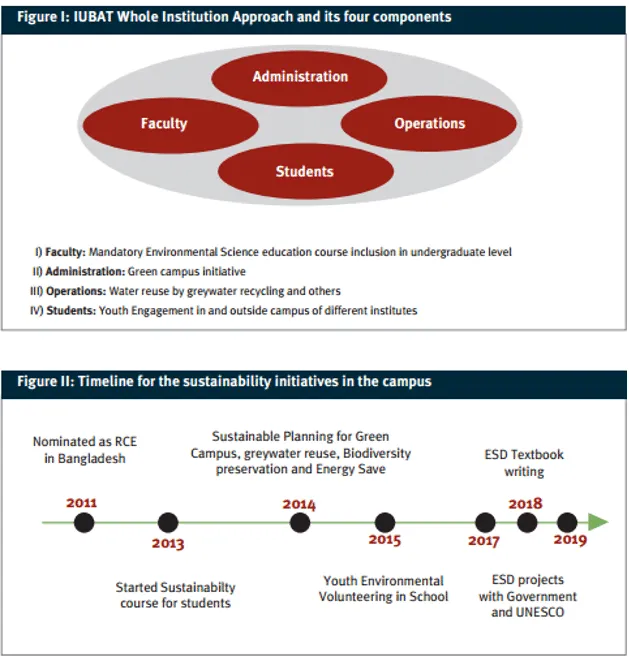
Fig 1: Showing IUBAT Whole Institute approach on ESD
Action Research on Environmental Sustainability
The CGEC the host of all ESD activities of IUBAT completed several action researches on Environmental Development in a Rural Community with resource support of UNDP channeled through the Sustainable Environmental Management Program (SEMP), Ministry of Environment and Forests, GOB. Implemented programs were listed below:
- Proceedings of The Dialogue on Education For Sustainability Held on August 12, 2008 at CIRDAP Auditorium, Dhaka, Bangladesh Time: 10:30 AM to 2:0 PM
- Special Plantation Program -2008: November 18, 2008, IUBAT Campus, Uttara, Dhaka
- Campaign against Turag River Pollution: November 18, 2008
- The Role of Education for Sustainability in Pollution Control: November 25, 2008, IUBAT Conference Hall, IUBAT, Uttara, Dhaka
- Participated in the Workshop on Finalization of Standing Orders on Disaster Management, organized by The Ministry of Food and Disaster Management, Disaster Management Bureau, Govt. of the People’s Republic of Bangladesh and UNDP-Bangladesh
- Bandarban Hill District, Chittagong Hill Tracts to plan for a model Sustainable Upland Agricultural and Biodiversity project.
- Workshop on Education for Sustainable Development through Community Learning Centre (CLC), Organized by UNESCO, Okayama University, Japan & Ahsania Mission, Dhaka, Bangladesh, IDB Bhaban, Dhaka, January 11-12, 2009
- Seminar on Solar Energy for High-Rise Buildings in Urban Areas: Held on July 30, 2009 at IUBAT Conference Hall, Dhaka
- Study on the Traditional Practices for Solid Waste Recycling in Rural Homes, Paper presented in the International Conference on Solid Waste Management; Waste Safe Proceeding 2009 held on November 9 and 10, 2009 at KUET, Khulna, Bangladesh. Vol. 2: pp 707-716
- “Save Uttara Lake” an awareness program was organized jointly with the Daily Samokal, February 25, 2009
- Plantation program 2010 in 5th June 2010
- EfS-Education for Sustainability has prepared a Handbook on Awareness and Practices, and curricula for age group 12 and above is in progress
- Activity classes were also taken for the Students of IUBAT under Education Planning Course
- Bamboo: an Excellent Plantation Crop for Climate Change Adaptation; IUBAT Conference Hall, Uttara Model Town, Dhaka, April 25, 2010
- Coconut: a Great Plantation Crop for Climate Change Adaptation; IUBAT Conference Hall, Uttara Model Town, Dhaka, May 2, 2010
- Seminar on Climate Change and Global Food Insecurity: A Trend Analysis by Fulbright Scholar Dr Mohammed Rabbi, Associate Professor, Life Sciences and Science, Valley Forge Military College, Pennsylvania, USA, January 10, 2014
- Seminar on Fungal Role in Ecosystems and Fungal in Human by Dr Babla Singha Barua (Head Researcher), Mushroom Research and Development Office, Jinen Koubo, Co., Ltd, Gunma, Japan, March 5, 2014
- Participated in the 7th Beijing International Forum on Education for Sustainable Development (ESD) and the Fourth Asia-Pacific Expert Meeting 26-29 October 2016, Beijing, China
- RCE Greater Dhaka: Biodiversity Conservation, Chapter 5; In Innovation in Local and Global Learning Systems for Sustainability: Traditional Knowledge and Biodiversity- Learning Contributions of the Regional Centres of Expertise on Education for Sustainable Development; United Nations University Institute of Advance Studies (UNU-IAS) Yokohama, Japan e-ISBN: 978-92-808-4540-2; United Nations University-2013
- “Improvement of Health, Hygiene and Nutritional Status of Urban Slum Dwellers:
A Programme of RCE Greater Dhaka, Bangladesh”;RCE Booklet-2017; United Nations University, Japan
Collaborative research Programs with International Geosphere-Biosphere Programme Synthesis Integration and Exploration (IGBP SIE): Sweden in 2015-2016.
- Droughts in Environmental Changes and Sustainability of Asian Least Developing Countries (LDCs)
- Flood in the Context of Environmental Changes and Sustainability: Bangladesh and Nepal
- Marine Environment of Bangladesh and Myanmar
- Coastal Zone Management in Bangladesh
Other ongoing Projects:
- Preparation of Master of Sustainability Studies (MSS) Course Curriculum for Post graduates.
- Rural Home-Centered Aggregating Farming (RHCAF) for Biodiversity Conservation, Ecosystem-based Adaptation and Climate Action
- Study on traditional production of Date palm sugar in Faridpur
- Food Security and Soil Fertility of Hilly Areas of Bangladesh, a running project
- Wetland preservation in Dhaka City Area: A project has been submitted to Ramsar Bureau
- Sustainable Landscape Management in Bangladesh, project is in progress
- Study on under-utilized species, is in progress
- Established a Germplasm Centre at Ashulia, Uttara, Dhaka.
Reference
- Muhammad Rehan Dastagir, Mohammed Ataur Rahman, Muhammad Azizul Hoque. 2017.“Mobilizing Education for Sustainable Development Program in the Regional Centre of Expertise Greater Dhaka: IUBAT Whole-Institution approach of Global Action Program.”
IUBAT Review 1 (2): 49-64. iubat.edu/journal - /research/centres/cgec/
- https://iiss.iubat.edu/
- https://www.rcegreaterdhaka.org
- https://www.rcenetwork.org/portal/rce-profile-detail/rce-greater-dhaka